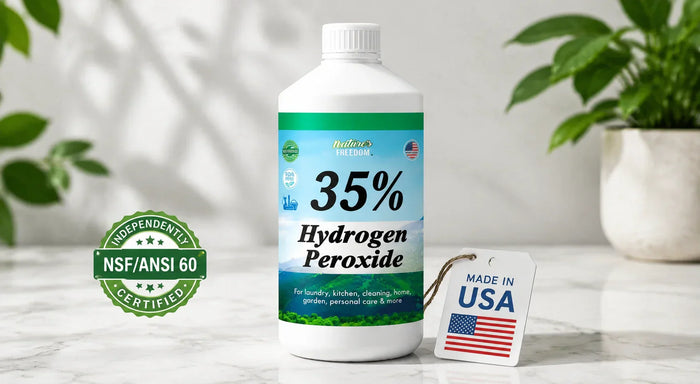

Direct Answer: 12% hydrogen peroxide clears algae from reflecting pools by releasing active oxygen that breaks down organic matter at the cellular level. It leaves no chemical residue, requires no neutralization after treatment, and is safe for the surrounding landscape, wildlife, and decorative stone surfaces. Nature's Freedom 12% Hydrogen Peroxide is NSF Certified to NSF/ANSI/CAN 60 for drinking water treatment chemicals and NSF/ANSI/CAN 50 for pool and spa equipment, making it a verified safe alternative to chlorine and copper-based algaecides.
Why Reflecting Pools Develop Algae
Reflecting pools develop algae because their design works against standard pool chemistry. Most reflecting pools are shallow, still, and fully exposed to sunlight - three conditions that accelerate algae photosynthesis. Unlike swimming pools, they are rarely heated or circulated at high flow rates, which means conventional chlorine dissipates quickly and creates uneven treatment zones.
The result is recurrent green, black, or brown algae growth across pool walls, floor tiles, and decorative stone edges. Copper-based algaecides can stain light-colored stone and harm nearby plants. Chlorine shock at high doses can bleach decorative finishes. Hydrogen peroxide at 12% concentration addresses algae without any of these side effects.
How 12% Hydrogen Peroxide Eliminates Reflecting Pool Algae
12% hydrogen peroxide eliminates algae through oxidation. When added to pool water, H2O2 releases reactive oxygen species that rupture algae cell membranes, stopping photosynthesis and growth. Unlike chlorine, which binds to organic matter and forms chemical byproducts (trihalomethanes and chloramines), hydrogen peroxide breaks down entirely into water and oxygen.
According to the U.S. Environmental Protection Agency (EPA), hydrogen peroxide is classified as an approved antimicrobial pesticide for use in pool and water feature maintenance under EPA registration. Its complete decomposition profile makes it particularly suited to ornamental and decorative water features where chemical residue is an aesthetic and ecological concern.
Comparison: Hydrogen Peroxide vs. Common Reflecting Pool Treatments
|
Treatment |
Algae Effectiveness |
Stone/Tile Safe |
Wildlife Safe |
|
12% Hydrogen Peroxide |
High |
Yes |
Yes |
|
Chlorine Shock |
High |
Risk of bleaching |
No (toxic to fish/frogs) |
|
Copper Algaecide |
Medium |
Stains light stone |
No (toxic to aquatic life) |
|
UV Light Systems |
Medium |
Yes |
Yes |
|
Manual Scrubbing Only |
Low |
Yes |
Yes |
How to Treat a Reflecting Pool with 12% Hydrogen Peroxide
The following protocol applies to reflecting pools with a water volume of 500 to 5,000 gallons. Adjust dosage proportionally for larger installations.
Step-by-Step Treatment Protocol
1. Calculate pool volume. Measure the pool length, width, and average depth in feet. Multiply: Length x Width x Depth x 7.48 = gallons.
2. Initial dosage: Add 1 cup (8 fl oz) of Nature's Freedom 12% Hydrogen Peroxide per 500 gallons of water for mild to moderate algae. For heavy algae coverage, increase to 1.5 cups per 500 gallons for the initial treatment.
3. Application method: Pour the measured amount slowly around the perimeter of the pool. Do not concentrate in one area. Allow the water to circulate or agitate gently with a brush for even distribution.
4. Wait 24 to 48 hours. Algae will begin to die and detach from surfaces within 24 hours. Full clearing of water discoloration typically takes 24 to 48 hours depending on algae load.
5. Brush and remove debris. After the algae has died, use a pool brush to scrub loosened algae from walls and floor. Remove debris with a fine-mesh net.
6. Maintenance dose: Apply a maintenance dose of 0.5 cups per 500 gallons every 2 to 4 weeks to prevent algae regrowth. Increase frequency during summer months when sunlight exposure is highest.
Safety Note: Wear nitrile gloves and safety glasses when handling 12% hydrogen peroxide. Avoid direct skin contact or eye exposure. Nature's Freedom 12% H2O2 ships with a full GHS-compliant Safety Data Sheet. For full usage guidance, visit our 35% hydrogen peroxide product page or browse the complete hydrogen peroxide range.
NSF Certification: Why It Matters for Water Feature Treatment
Nature's Freedom 12% Hydrogen Peroxide carries two NSF certifications that are directly relevant to reflecting pool and water feature applications:
- NSF/ANSI/CAN 60 - Certified for drinking water treatment chemicals. This standard verifies that the product does not introduce harmful contaminants into treated water at recommended use concentrations.
- NSF/ANSI/CAN 50 - Certified for pool and spa equipment. This standard covers chemicals used in recreational water treatment and confirms compatibility with pool infrastructure and water chemistry.
No competing hydrogen peroxide products in this category carry both certifications. For decorative and ornamental water features where water may contact wildlife, plants, or decorative stone, NSF dual certification is the clearest available indicator of treatment safety and purity.
Reflecting Pool Maintenance: Preventing Algae Between Treatments
Algae prevention in reflecting pools depends on managing the three primary growth drivers: sunlight, nutrients, and water stagnation.
- Reduce nutrient load: Remove fallen leaves, bird waste, and organic debris promptly. Organic matter fuels algae growth by releasing phosphates and nitrates into the water.
- Improve water movement: Even low-flow circulation pumps significantly reduce algae establishment. Still water stratifies, creating warm surface layers where algae thrive.
- Apply routine H2O2 maintenance doses: A maintenance dose every 2 to 4 weeks maintains residual oxidation levels that inhibit algae photosynthesis before visible growth begins.
- Monitor water clarity: Cloudiness or a green tint is an early algae signal. Treating at this stage requires a lower dose than treating established algae colonies.
For broader guidance on hydrogen peroxide applications in water treatment, see Is Hydrogen Peroxide Safe for Pools and 12% Hydrogen Peroxide for Pools and Spas.
Frequently Asked Questions
1. How much 12% hydrogen peroxide do I add to a reflecting pool?
Add 1 cup (8 fl oz) of 12% hydrogen peroxide per 500 gallons of water for initial algae treatment. For ongoing maintenance, apply 0.5 cups per 500 gallons every 2 to 4 weeks. Calculate your pool volume using the formula: Length x Width x Depth x 7.48 = gallons.
2. Is 12% hydrogen peroxide safe for fish, frogs, and wildlife in or near a reflecting pool?
At recommended treatment concentrations (1 cup per 500 gallons), 12% hydrogen peroxide decomposes into water and oxygen within 24 to 48 hours and does not accumulate in the water column. However, if fish, frogs, or other aquatic wildlife are present, treat only one section of the pool at a time and allow full decomposition before treating adjacent sections. Remove sensitive wildlife to a holding container during initial high-dose treatments.
3. How long does it take for hydrogen peroxide to clear algae from a reflecting pool?
Algae cell death begins within 4 to 8 hours of treatment. Visible water clearing and algae detachment from surfaces typically takes 24 to 48 hours for mild to moderate algae. Heavy algae infestations may require a second treatment at 48 hours if significant green discoloration persists after the first application.
4. Will hydrogen peroxide stain or damage decorative stone or tiles in a reflecting pool?
12% hydrogen peroxide does not stain decorative stone, tile, or pool finishes at recommended treatment concentrations. Unlike copper-based algaecides, which can leave blue-green staining on light stone, or chlorine shock, which can bleach colored tile grout, hydrogen peroxide is chemically neutral to most pool surface materials. Always test on a small inconspicuous area before full treatment if using a decorative stone with an unknown sealant.
5. Can I use 35% hydrogen peroxide instead of 12% for reflecting pool algae?
35% hydrogen peroxide is significantly more concentrated and requires precise dilution before use in pool applications. For most homeowners and property managers, Nature's Freedom 12% Hydrogen Peroxide is the recommended starting concentration for reflecting pool treatment as it provides effective algae control at the correct application rate without the additional handling precautions required for 35% concentrate.
Key Takeaways
- 12% hydrogen peroxide clears reflecting pool algae through oxidation - it releases active oxygen that destroys algae cell membranes and breaks down fully into water and oxygen with no chemical residue.
- Application rate: 1 cup (8 fl oz) per 500 gallons for initial treatment. Maintenance dose: 0.5 cups per 500 gallons every 2 to 4 weeks.
- Nature's Freedom 12% Hydrogen Peroxide is NSF Certified to NSF/ANSI/CAN 60 (drinking water treatment) and NSF/ANSI/CAN 50 (pool and spa equipment) - the only dual-certified option in this category.
- Safe for decorative stone and tile surfaces. Does not stain light-colored finishes, unlike copper-based algaecides.
- Wildlife and plant safe at recommended concentrations. H2O2 decomposes fully within 24 to 48 hours, leaving no residual toxicity in the water column.
- For heavy algae infestations, a second treatment at 48 hours may be required. Brush loosened algae from pool surfaces and remove debris after die-off