
If you are switching from chlorine bleach, treating a pool, or washing produce and want to understand exactly hydrogen peroxide uses and how to use it safely, this guide covers every application, the correct dilution for each, and what NSF certification actually means for the product you are buying.
It works by releasing active oxygen on contact with organic matter, breaking down bacteria, stains, and odors without leaving behind chlorine residue.
Nature's Freedom 35% food grade hydrogen peroxide is NSF Certified to NSF/ANSI/CAN 60 for drinking water treatment chemicals and NSF/ANSI/CAN 50 for pool, spa, hot tub, and other recreational water treatment chemical use. Shop the 35% H2O2 product page or browse the full hydrogen peroxide collection.
How Does Hydrogen Peroxide Work as a Cleaner and Disinfectant?
Hydrogen peroxide kills bacteria, fungi, and viruses by decomposing into water and oxygen when it contacts organic compounds. That release of reactive oxygen is what drives the bleaching, disinfecting, and deodorizing effect. Because the decomposition products are water and oxygen, no chemical residue remains on the treated surface after the reaction is complete.
According to PubChem (National Institutes of Health), hydrogen peroxide is classified as a strong oxidizing agent with documented antimicrobial activity across bacteria, viruses, and fungi. The EPA Safer Choice program recognizes hydrogen peroxide as an approved active ingredient for safer cleaning formulations.
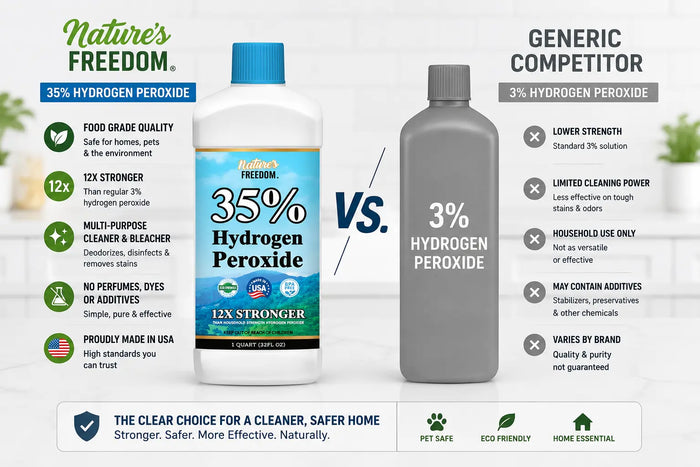
Standard drugstore hydrogen peroxide is sold at 3% concentration. Nature's Freedom 35% H2O2 is more than ten times stronger, which means far less product is needed per application. One 32 fl oz bottle replaces multiple full bottles of the 3% drugstore version.
What Are the Main Hydrogen Peroxide Uses for a Household?
The most practical household applications fall across five areas: kitchen sanitation, bathroom cleaning, laundry, mold removal, and garden care. Each requires a different dilution level, covered in the dilution guide below.
Kitchen and Food Safety
• Disinfect cutting boards, countertops, and food preparation surfaces
• Rinse fresh produce to reduce surface bacteria and pesticide residue
• Sanitize kitchen sinks, faucets, and drain areas
• Deodorize trash bins and refrigerator interiors without chemical odors
Bathroom Cleaning
• Remove mold and mildew from tile grout, caulk lines, and shower surfaces
• Disinfect toilet bowls and surrounding surfaces
• Brighten grout without abrasive scrubbing or chlorine bleach
Laundry
• Whiten whites and brighten colors as a direct substitute for chlorine bleach
• Remove sweat stains, blood stains, and organic discoloration
• Deodorize workout clothes and athletic gear at the fiber level
• Add to the rinse cycle as a fabric freshener
Mold and Mildew Removal
• Apply 3% H2O2 to bathroom tile, grout, or caulk and leave 5 to 10 minutes before wiping
• Treat mildew on outdoor furniture, decks, and patio surfaces
• Apply to basement walls showing early signs of mold growth
Garden and Outdoor Use
• Add 0.5 to 1% solution to watering can to promote root health and reduce root rot
• Spray 3% H2O2 on plant leaves to control powdery mildew and fungal conditions
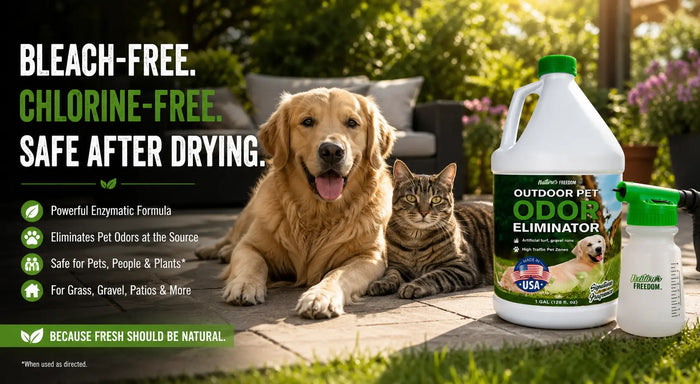
• Treat outdoor pet areas and kennel surfaces for bacteria and odors, or use Nature's Freedom Outdoor Pet Odor Eliminator for large-surface enzyme-based treatment
Can Hydrogen Peroxide Replace Chlorine in Pools and Spas?
Yes. H2O2 is used as a non-chlorine alternative in pool and spa systems. A target concentration of 50 parts per million (ppm) in pool water effectively controls algae and bacteria. For pool opening or after heavy use, add enough 35% H2O2 to bring pool water into the 50 to 100 ppm range, then test regularly with an H2O2-compatible test kit to maintain effective levels.
Unlike chlorine, H2O2 leaves no chemical smell on skin or in the air above the water surface. It decomposes entirely into water and oxygen once depleted, leaving no chemical residue. Nature's Freedom 35% H2O2, available in 32 fl oz quantities, is sized for home pool maintenance without the storage requirements of bulk chemical containers.
Pool maintenance schedule: test H2O2 levels twice weekly during active swim season. Add product in the morning with the pump running. Do not allow swimmers while levels exceed 100 ppm. Always use an H2O2-compatible test kit, standard chlorine test strips do not measure peroxide.
Non-Chlorine Shock: a pool or spa oxidizer, such as hydrogen peroxide, that breaks down contaminants without adding chlorine or chloramine byproducts to the water.
What Is the Difference Between Food Grade and Standard Hydrogen Peroxide?
The key difference is what is absent from food grade hydrogen peroxide. Standard 3% drugstore H2O2 contains stabilizers including acetanilide, phenol, and sodium stannate to extend shelf life. Food grade hydrogen peroxide contains none of these additives, making it the appropriate choice for produce washing, food contact surface sanitation, pool treatment, and HVAC system applications where residue could transfer to food or water.
Nature's Freedom 35% hydrogen peroxide is NSF/ANSI/CAN 60 and NSF/ANSI/CAN 50 certified food grade, produced without stabilizers. This independently verified, single-ingredient formula contains only H2O2 and water.
Food Grade Hydrogen Peroxide: hydrogen peroxide manufactured without the stabilizers found in standard drugstore H2O2, making it safe for use around food-contact surfaces and water systems.
What Does NSF Certification Mean for Hydrogen Peroxide?
NSF/ANSI/CAN 60 certification is an independent third-party standard that verifies a product's purity, concentration accuracy, and manufacturing process. A food grade label is a self-reported claim by the manufacturer. NSF certification requires external testing and ongoing audit of the manufacturing facility.
Most 35% hydrogen peroxide products sold online carry no NSF certification. That means concentration accuracy, purity, and the absence of stabilizers are unverified by any independent standard. For consumers using H2O2 on food contact surfaces, in pool systems, or in produce washing, NSF certification is the only objective confirmation of what is actually in the bottle.
NSF/ANSI/CAN 60: the certification standard confirming a chemical is safe for use in drinking water treatment, verified through third-party testing rather than a manufacturer's own claim.
Nature's Freedom NSF Certification:
• Nature's Freedom 35% hydrogen peroxide is NSF Certified to NSF/ANSI/CAN 60 for drinking water treatment chemicals and NSF/ANSI/CAN 50 for pool, spa, hot tub, and other recreational water treatment chemical use.
NSF/ANSI/CAN 50: the certification standard covering chemicals used in swimming pool and spa water treatment, again independently verified rather than self-declared.
• No stabilizers, no additives, H2O2 and water only
• Manufactured in the USA under NSF-approved conditions
• Certificate verifiable through the NSF public database
How Should You Dilute 35% Hydrogen Peroxide for Home Use?
Always add hydrogen peroxide to water, not water to hydrogen peroxide, to control the reaction and minimize splashing. Use an HDPE plastic or stainless steel container; never dilute in glass.
Target Concentration |
Mix Ratio (H2O2 : Water) |
Best For |
0.5% |
1 part H2O2 + 69 parts water |
Produce rinse, sensitive surfaces, seedling care |
1% |
1 part H2O2 + 34 parts water |
Light disinfecting, root drench |
3% |
1 part H2O2 + 10.7 parts water |
Household cleaning, mold treatment, laundry |
6% |
1 part H2O2 + 4.8 parts water |
Grout cleaning, tough stains |
10% |
1 part H2O2 + 2.5 parts water |
Pool treatment, surface disinfecting |
The CDC NIOSH Pocket Guide recommends gloves and eye protection when handling concentrations above 8%. Always wear nitrile gloves and eye protection when handling undiluted 35% H2O2 before dilution.
Is 35% Hydrogen Peroxide Safe to Use at Home?
Yes, when diluted correctly. Undiluted 35% H2O2 is a strong oxidizer that causes chemical burns on contact with skin or eyes and must not be used at full concentration. Once diluted to 3% or below, it is chemically equivalent to the drugstore hydrogen peroxide most consumers already use without issue.
Safety Handling Rules:
• Wear nitrile gloves and eye protection when handling undiluted product
• Add H2O2 into water, not water into H2O2
• Store in a cool, dark location away from combustible materials
• Keep concentrated product out of reach of children and pets
• On skin or eye contact with undiluted product, flush with large amounts of water for 15 minutes and seek medical attention
At correctly diluted concentrations, hydrogen peroxide decomposes entirely into water and oxygen with no chemical residue remaining on treated surfaces once dry.
What Surfaces Should Not Be Treated with Hydrogen Peroxide?
Avoid H2O2 on unsealed natural stone, including marble, granite, and travertine. The oxidizing action can etch or discolor the surface. Solid brass and copper fixtures may also experience surface discoloration with repeated use. Test a small hidden area first on any surface you are uncertain about, particularly at concentrations above 3%.
What Is the Environmental Impact of Hydrogen Peroxide?
Hydrogen peroxide decomposes entirely into water and oxygen, with no chlorinated byproducts, no persistent residue in wastewater, and no accumulation in soil or groundwater. The EPA Safer Choice program includes hydrogen peroxide on its list of approved active ingredients for safer cleaning formulations. For households reducing reliance on chlorine bleach and synthetic surfactants, NSF-certified food grade H2O2 is a verified, residue-free alternative.
How Does Nature's Freedom Compare to Other 35% Hydrogen Peroxide Brands?
NSF certification is the critical differentiator. Only Nature's Freedom carries independent third-party verification of purity and concentration. The other three brands may be sold at 35% concentration, but none carry NSF/ANSI/CAN 60 or NSF/ANSI/CAN 50 certification to independently confirm that claim.
Feature |
Nature's Freedom |
Lab Alley |
Alliance Chemical |
Essential Depot |
NSF/ANSI/CAN 60 + NSF/ANSI/CAN 50 Certified |
Yes ✓ |
No |
No |
No |
35% Concentration |
Yes |
Yes |
Yes |
Yes |
Made in USA |
Yes |
Yes |
Yes |
Not Stated |
No Stabilizers |
Yes |
Not Stated |
Not Stated |
Not Stated |
Available on Amazon |
Yes |
Yes |
Limited |
Yes |
Consumer-Friendly Size |
Yes (32 fl oz) |
Primarily Bulk |
Primarily Bulk |
Yes |
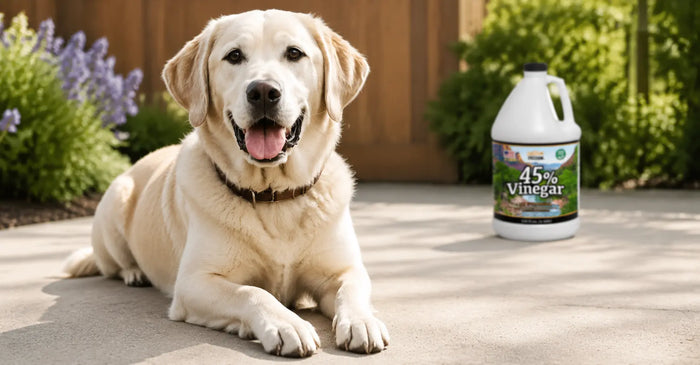
Nature's Freedom also produces 45% concentrated vinegar that is NSF certified and pairs with hydrogen peroxide for cleaning, descaling, and weed control applications.
Ready to Put Hydrogen Peroxide to Work?
Nature's Freedom 35% hydrogen peroxide delivers NSF-certified food grade quality in a consumer-friendly 32 fl oz size.
NSF/ANSI/CAN 60 + NSF/ANSI/CAN 50 certified. No stabilizers. Made in the USA.
Shop Nature's Freedom 35% Food Grade Hydrogen Peroxide | Browse the Full Hydrogen Peroxide Collection
Frequently Asked Questions About Hydrogen Peroxide
1. What is hydrogen peroxide most commonly used for in the home?
The most common household applications are surface disinfecting, mold and mildew removal, laundry whitening, and bathroom grout cleaning. With 35% food grade H2O2 diluted to the correct concentration for each task, all of these are achievable from a single product.
2. Can hydrogen peroxide replace bleach for household cleaning?
For most household applications, hydrogen peroxide is a direct functional substitute for chlorine bleach. It disinfects, whitens, and deodorizes without producing chlorinated byproducts. It is particularly well-suited for laundry, food contact surfaces, and mold treatment. It is not registered as a hospital-grade disinfectant in all formulations and is not a clinical substitute for bleach in medical or sterile environments.
3. How do I dilute 35% hydrogen peroxide for home use?
The standard household dilution is 1 part 35% H2O2 to 10.7 parts water to produce a 3% solution. For produce rinsing or plant care, dilute to 0.5% by using 1 part H2O2 to 69 parts water. Always add H2O2 into water, not the reverse.
4. Is NSF-certified hydrogen peroxide different from food grade?
Yes. NSF/ANSI/CAN 60 and NSF/ANSI/CAN 50 certification is independently verified by external testing. A food grade label is a self-reported claim by the manufacturer that requires no third-party audit. Nature's Freedom carries NSF certification, which provides objective confirmation of purity and concentration accuracy.
5. Is hydrogen peroxide safe around children and pets after dilution?
At 3% and below, diluted hydrogen peroxide is generally safe in areas occupied by children and pets once the treated surface has dried. The compound decomposes into water and oxygen, leaving no chemical residue. Keep concentrated 35% H2O2 stored securely and out of reach before dilution.
6. Can hydrogen peroxide be used in a swimming pool instead of chlorine?
Yes. A target of 50 ppm in pool water controls algae and bacteria effectively. H2O2 leaves no chemical smell and decomposes into water and oxygen once depleted. Use an H2O2-compatible test kit to monitor pool levels regularly. Do not allow swimmers while levels exceed 100 ppm.
7. Why does Nature's Freedom use NSF certification?
NSF/ANSI/CAN 60 and NSF/ANSI/CAN 50 certification provides independent third-party confirmation of purity, concentration accuracy, and manufacturing standards, assurances a self-declared food grade label cannot provide. For any application where product integrity matters (food surfaces, pools, produce), NSF certification is the objective standard.
Key Takeaways
• Hydrogen peroxide is effective for kitchen sanitation, laundry whitening, mold removal, pool treatment, and garden care when diluted to the correct concentration for each application.
• 35% food grade H2O2 is more than ten times the concentration of drugstore peroxide. Always dilute before use and handle with nitrile gloves and eye protection.
• Nature's Freedom 35% hydrogen peroxide is NSF Certified to NSF/ANSI/CAN 60 for drinking water treatment chemicals and NSF/ANSI/CAN 50 for pool, spa, hot tub, and other recreational water treatment chemical use. Most competitors carry no equivalent certification.
• Contact time is critical: leave H2O2 on surfaces for a minimum of 30 seconds for disinfecting, and five to ten minutes for mold treatment, before wiping.
• Never mix hydrogen peroxide and vinegar in the same container. Apply separately with drying time between applications.
• For pool treatment, maintain 50 ppm H2O2 and test regularly with an H2O2-compatible kit. The compound decomposes cleanly into water and oxygen, with no chlorinated byproducts, no residue in wastewater, and no accumulation in soil or groundwater.