
Concentrated vinegar at 45% acetic acid is dangerous if it contacts the eyes or skin without protection, but it is not a highly toxic chemical. Under the GHS (Globally Harmonized System of Classification and Labelling of Chemicals), 45% acetic acid is classified as Skin Irritation Category 1 and Eye Damage Category 1 - the same framework used on all safety labels and Safety Data Sheets. With nitrile gloves and safety glasses, it is safe to handle and use at home. Once dry, it breaks down into water and carbon dioxide with no toxic residue. For the complete GHS classification guide, PPE specifications, and first aid protocols, see Concentrated Vinegar Safety: The Complete Guide.
TL;DR
- Concentrated vinegar at 45% is dangerous without PPE and safe with it. The risk is at the point of direct contact only - not from residual exposure after drying.
- GHS classification: Skin Irrit. Cat. 1 and Eye Dam. Cat. 1. Minimum PPE: nitrile gloves and safety glasses - these eliminate the primary risk pathways.
- Eye contact is the most serious risk. Immediate 20-minute continuous rinsing and medical evaluation are required. Never delay.
- Never mix concentrated vinegar with bleach. Acetic acid plus sodium hypochlorite produces chlorine gas.
-
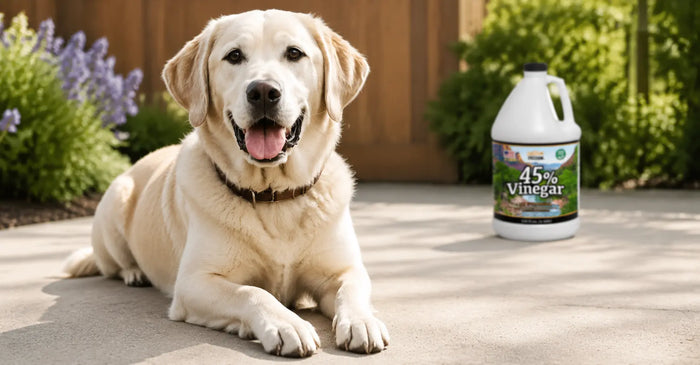
Nature's Freedom 45% Concentrated Vinegar is NSF Certified to NSF/ANSI/CAN 60 for drinking water treatment chemicals and ships with a full GHS-compliant SDS.
What Makes Concentrated Vinegar Dangerous?
Acetic acid is the active compound in all vinegar. At 5%, it is not classified as a hazardous substance. At 45%, it is nine times more concentrated, which places it in a different GHS hazard category entirely. The higher concentration gives the acid enough energy to disrupt skin cell membranes on contact and cause serious corneal damage if it reaches the eyes without rinsing. For a full safety profile comparing 5% and 45% concentration effects, see Is 45% Vinegar Dangerous? Safety Facts Explained.
The danger is not from chronic exposure or systemic toxicity - acetic acid does not absorb through skin into the bloodstream at harmful levels. The hazard is acute, local, and at the point of direct contact. PPE creates a physical barrier that eliminates the primary risk pathway entirely.
How Does Concentrated Vinegar Compare to Bleach in Terms of Danger?
Both are household chemicals that require PPE, but they present different hazard profiles.
|
Factor |
45% Concentrated Vinegar |
Household Bleach (5%) |
|
GHS skin classification |
Skin Irrit. Cat. 1 |
Skin Corros. Cat. 1B |
|
GHS eye classification |
Eye Dam. Cat. 1 |
Eye Dam. Cat. 1 |
|
Toxic gas risk |
None under normal use |
Chlorine gas if mixed with ammonia or acids |
|
PPE required |
Gloves + eye protection |
Gloves + eye protection |
|
Safe when dry |
Yes - breaks down to H2O + CO2 |
Yes - evaporates |
|
Mixes safely with |
Water, salt, dish soap |
Water only |
|
NSF certified option |
Yes - Nature's Freedom (NSF/ANSI/CAN 60) |
No |
Never mix concentrated vinegar with bleach. Acetic acid combined with sodium hypochlorite produces chlorine gas, a toxic respiratory hazard. Both products can be used on the same surface but must be applied separately with thorough rinsing in between.
What Are the Actual Risks of Concentrated Vinegar?
Skin Contact - Moderate Risk
Brief skin contact causes stinging and redness. Prolonged contact, particularly on sensitive skin, can cause a chemical burn. Nitrile or rubber gloves worn during all handling eliminate this risk. If contact occurs without gloves, rinse with water immediately for a minimum of 15 minutes. Skin burns from concentrated vinegar, even from prolonged contact, are typically superficial and heal without permanent scarring when treated promptly.
Eye Contact - Serious Risk
Eye contact is the most serious hazard. Undiluted 45% acetic acid can cause significant corneal damage rapidly. The American Academy of Ophthalmology recommends immediate continuous rinsing for at least 20 minutes for any chemical eye exposure, followed by immediate medical evaluation. Safety glasses or chemical splash goggles prevent this risk entirely.
Vapor Inhalation - Low Risk Outdoors, Moderate in Enclosures
Under GHS, 45% acetic acid is classified as STOT SE Category 3 for respiratory tract irritation. In outdoor use or well-ventilated indoor spaces, vapor concentration is too low to cause harm. In a sealed room, prolonged vapor exposure can irritate the nose, throat, and airways. Opening windows and doors before working indoors resolves this entirely.
After Drying - No Risk
Once applied and dried, acetic acid decomposes into water and carbon dioxide. There is no residual hazard on treated surfaces. Children and pets can return to treated areas safely after drying, typically within one to two hours on a warm day. For pet-specific drying times, see Is 45% Vinegar Safe for Pets?.
How to Handle Concentrated Vinegar Safely
Minimum PPE: nitrile or rubber gloves (minimum 4 mil, wrist-length) and safety glasses or chemical splash goggles for all handling and application. Under OSHA's Hazard Communication Standard (HCS 2012), manufacturers are required to document PPE requirements on the product SDS. These two items eliminate the primary risk pathways for skin and eye contact.
- Work outdoors or open windows and doors before applying indoors.
- Keep the container sealed when not actively pouring to limit vapor release.
- Never mix with bleach (sodium hypochlorite) or other oxidizing agents.
- Store in a sealed HDPE plastic, glass, or stainless steel container.
- Keep children and pets away from treated areas until fully dry.
Nature's Freedom 45% Concentrated Vinegar is NSF Certified to NSF/ANSI/CAN 60 for drinking water treatment chemicals and ships with a full GHS-compliant Safety Data Sheet.
The Bottom Line: Is Concentrated Vinegar Dangerous?
Concentrated vinegar is dangerous without the right PPE and safe with it. Nature's Freedom 45% Concentrated Vinegar is NSF Certified to NSF/ANSI/CAN 60 for drinking water treatment chemicals, made in the USA, and ships with a full GHS-compliant Safety Data Sheet. For the complete PPE specs, dilution tables, and first aid protocols, see Concentrated Vinegar Safety: The Complete Guide Browse the full range or contact Nature's Freedom.
Frequently Asked Questions
1. Is concentrated vinegar more dangerous than regular white vinegar?
Yes, significantly. Regular white vinegar at 5% acetic acid is not classified as hazardous under GHS and requires no special PPE for normal use. At 45%, the same compound is present at nine times the concentration, placing it in GHS Skin Irritation Category 1 and Eye Damage Category 1. The chemistry is identical; the hazard level scales with concentration.
2. Can concentrated vinegar cause permanent damage?
Permanent damage is possible from eye contact if rinsing is delayed. Acetic acid at 45% can cause irreversible corneal damage if not flushed immediately and thoroughly. Skin burns, even from prolonged contact, are typically superficial and heal without permanent scarring when treated promptly. Immediate, extended water rinsing is the critical factor in all exposure scenarios.
3. Is concentrated vinegar safe to use around food preparation areas?
Once diluted for cleaning (1:10 ratio) and the surface has been wiped dry, acetic acid leaves no toxic residue and is safe for food-contact surfaces. During application of undiluted 45% solution, keep food, beverages, and food-preparation tools away from the area. Nature's Freedom 45% Concentrated Vinegar is NSF Certified to NSF/ANSI/CAN 60 for drinking water treatment chemicals, confirming independently verified safety standards for its formula.
4. What should I do if someone accidentally drinks concentrated vinegar?
Do not induce vomiting. Rinse the mouth with water and give small sips of water or milk if the person is conscious and able to swallow. Call US Poison Control immediately at 1-800-222-1222 (poison.org). Seek emergency medical care. Nature's Freedom 45% Concentrated Vinegar is not food grade at this concentration.
5. Does concentrated vinegar produce dangerous fumes when heated?
Heating concentrated vinegar increases vapor pressure and the concentration of acetic acid vapor in the surrounding air. This raises the inhalation risk compared to using the product at room temperature. Do not heat 45% concentrated vinegar. Use it at ambient temperature and ensure ventilation. Cooking applications use dilute food-grade acetic acid at 4% to 8% - an entirely different product from 45% concentrated cleaning vinegar.
Key Takeaways
- Concentrated vinegar is dangerous without PPE and safe with it. The risk is at the point of direct contact only - not from residual exposure after drying.
- GHS classification: Skin Irrit. Cat. 1, Eye Dam. Cat. 1, STOT SE Cat. 3. Full SDS available from Nature's Freedom.
- Minimum PPE: nitrile gloves and safety glasses. These two items eliminate the primary risk pathways for skin and eye contact. Read our 45% concentrated vinegar guide.
- Never mix with bleach. Acetic acid plus sodium hypochlorite produces chlorine gas, a toxic respiratory hazard.
- US Poison Control: 1-800-222-1222 (poison.org) for any accidental ingestion or exposure concerns.
- For the complete PPE specifications, dilution tables, and first aid protocols, see Concentrated Vinegar Safety: The Complete Guide.