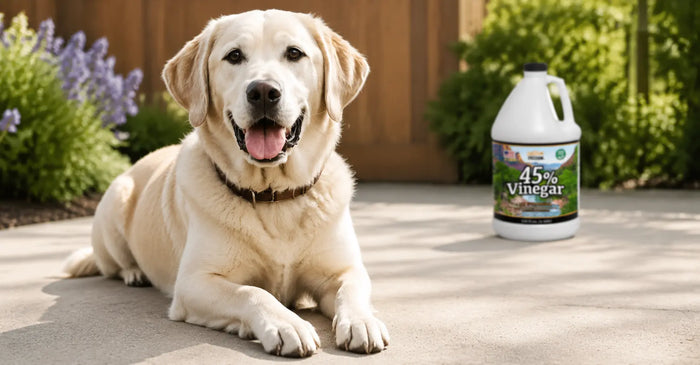

If you are wondering whether 45% vinegar is dangerous before buying or using it for the first time, that is exactly the right question to ask. Yes - concentrated 45% acetic acid vinegar is significantly more hazardous than the 5% white vinegar in your kitchen cupboard, and it must be handled differently. But 'dangerous' is not the same as 'unusable.' With the correct PPE, proper dilution, and a basic understanding of first aid, it is a safe and highly effective cleaning and weed control product for most home and commercial users.
This guide covers exactly what makes 45% vinegar hazardous, at what concentrations the risks change, what safety equipment you need, how to dilute it safely, what to do if exposure occurs, and who should and should not use it.
For a complete guide to all applications and dilution ratios, see the Concentrated Vinegar Complete Guide.
TL;DR - Key Points
• 45% vinegar is corrosive at full strength - it can cause skin burns, serious eye injury, and airway irritation; it must be treated as an industrial chemical and handled with PPE.
• Diluted to 1-5% for household cleaning it poses minimal risk and is safe on most surfaces with no special equipment needed.
• PPE is required before opening the undiluted bottle - nitrile gloves and eye protection as a minimum; respiratory protection in poorly ventilated spaces.
• Never mix concentrated vinegar with bleach - the reaction produces toxic chlorine gas.
• In case of skin or eye contact, flush with large amounts of water for a minimum of 15 minutes and seek medical attention for eye exposure regardless of initial symptoms.
What Is 45% Vinegar and Why Is It Stronger Than Regular Vinegar?
Vinegar is a solution of acetic acid in water. The percentage on the label tells you the acetic acid content. Regular white vinegar is 5% acetic acid - a mild, food-safe concentration. Cleaning vinegar sold in stores is typically 6-10%. Nature's Freedom concentrated vinegar is 45% acetic acid, NSF Certified to NSF/ANSI/CAN 60 for drinking water treatment chemicals, and nine times stronger than the grocery store alternative. According to PubChem (NIH) acetic acid data, pure acetic acid is classified as a corrosive substance. At 45%, the solution is strong enough to dissolve mineral deposits rapidly, kill weeds on contact, and sanitize surfaces - but also strong enough to cause chemical burns on skin, serious damage to eyes, and airway irritation if inhaled in confined spaces.
The increased effectiveness and the increased hazard are two sides of the same coin. The chemistry that makes it nine times better at descaling and weed control is the same chemistry that requires you to handle it differently from the vinegar you use in salad dressing.
Is 45% Vinegar Dangerous? The Risk by Concentration
The risk level of acetic acid vinegar changes directly with concentration. This table covers the full range from grocery store white vinegar to the 45% concentrate.
|
Concentration |
Product Type |
Risk Level |
PPE Required |
Skin Safe? |
|
1-5% |
Diluted working solution |
Low |
None for brief contact |
Yes |
|
5-10% |
Cleaning / descaling |
Low-moderate |
Gloves recommended |
Brief contact only |
|
10-20% |
Industrial cleaning |
Moderate |
Gloves + eye protection |
No - avoid contact |
|
45% |
Nature's Freedom concentrate |
High - corrosive |
Nitrile gloves + eye protection + ventilation |
No - chemical burns |
Shop Nature's Freedom 45% Concentrated Vinegar - 1 gallon - NSF Certified to NSF/ANSI/CAN 60 for drinking water treatment chemicals. Always dilute before household use.
|
NSF Certification Nature's Freedom 45% Concentrated Vinegar is NSF Certified to NSF/ANSI/CAN 60 for drinking water treatment chemicals. This is an independent third-party verification of concentration accuracy and purity. |
The Real Risks: What 45% Vinegar Can and Cannot Do
Skin Contact
Undiluted 45% acetic acid causes chemical burns on contact with skin. The burn is not immediate - unlike a flame burn, acid burns develop over minutes as the acetic acid penetrates tissue layers and denatures proteins. Do not underestimate the risk because you do not feel pain immediately on contact. Per CDC NIOSH acetic acid safety data, concentrated acetic acid causes severe skin damage, including deep burns on prolonged contact and irritation on brief exposure. Diluted to 5% or below, the risk to intact skin drops substantially.
Eye Contact
Eye contact with undiluted 45% concentrate causes serious injury. The cornea is highly sensitive to acid damage and even brief exposure to concentrated acetic acid can cause permanent vision impairment if not flushed immediately and thoroughly. Eye protection is non-negotiable when handling the undiluted concentrate - always.
Inhalation
Acetic acid vapors from the concentrate are irritating to the nose, throat, and lungs. In poorly ventilated spaces, prolonged exposure to acetic acid vapor causes headache, throat irritation, and coughing. Always work in a ventilated area when handling the undiluted concentrate.
Ingestion
Swallowing concentrated acetic acid causes serious burns to the mouth, throat, and digestive tract. Store the product out of reach of children. Per OSHA acetic acid chemical safety data, if swallowing occurs, do not induce vomiting - call poison control immediately.
What It Cannot Do
To be equally clear about what the risks are not: 45% vinegar is not toxic in the same way as bleach or industrial solvents. It does not produce toxic fumes under normal use conditions. It is biodegradable - it breaks down to carbon dioxide and water in the environment. It does not accumulate in soil or groundwater. Once diluted to working strength and allowed to dry on a surface, it leaves no harmful residue.
What PPE Do You Need for 45% Vinegar?
The following PPE applies whenever you handle the undiluted concentrate directly - opening the bottle, measuring, pouring, and mixing.
• Nitrile or neoprene gloves. Minimum thickness 0.2mm. Latex is not adequate protection against acetic acid at this concentration. Chemical-resistant nitrile gloves rated for acid exposure are the correct choice.
• Eye protection. Safety glasses provide splash protection. Chemical splash goggles provide full coverage and are preferable when pouring. Standard reading glasses or sunglasses are not PPE - they do not seal around the eyes.
• Ventilation. Work outdoors or in a well-ventilated space. Open doors and windows before opening the bottle. Avoid leaning directly over the opening when pouring.
• Respiratory protection (optional for most users). Healthy adults in well-ventilated spaces do not typically need a mask for small-volume handling tasks. If you have asthma, a respiratory condition, or are working in a confined space with poor airflow, a half-face respirator with acid gas cartridges provides additional protection.
• Appropriate clothing. Long sleeves and closed shoes protect against splashes during handling and outdoor application. Avoid synthetic fabrics that concentrate acid contact - natural fiber long sleeves are preferable.
How to Handle 45% Vinegar Safely: Step-by-Step
1. Put on PPE before opening the bottle. Gloves on, eye protection on. Do not skip this step even for a small measurement.
2. Measure in a well-ventilated area. Open the bottle and work quickly. Pour into a measuring cup or graduated syringe. Do not pour directly from a large container without measuring.
3. Add concentrate to water - never water to concentrate. Pour the measured concentrate slowly into the water. This distributes the heat of mixing safely. Adding water to acid can cause sudden spattering.
4. Label every container immediately. Every diluted bottle gets labeled with concentration, date mixed, and a caution note. Diluted vinegar looks identical to water.
5. Close and store the concentrate immediately. Replace the cap tightly. Store in a cool, dry, well-ventilated location away from children, direct sunlight, and heat sources.
6. Wash hands thoroughly after handling. Even with gloves on. Remove gloves by turning them inside-out to avoid skin contact with the outer surface.
For appliance descaling and cleaning applications, browse the Nature's Freedom concentrated vinegar collection.
First Aid: What to Do If Exposure Occurs
|
WARNING Apply first aid immediately. Do not wait for symptoms to develop before responding. |
Skin Contact
Remove contaminated clothing immediately. Flush the affected area with large amounts of clean, running water for a minimum of 15 minutes. Do not scrub. Seek medical attention if redness, pain, or blistering develops.
Eye Contact
Flush eyes immediately with clean water for a minimum of 15 minutes, holding eyelids open throughout. Do not rub eyes. Seek medical attention immediately regardless of whether symptoms are present - corneal damage from acid exposure can be delayed.
Inhalation
Move to fresh air immediately. If breathing is difficult or does not return to normal within a few minutes, seek medical attention. Do not re-enter a contaminated space without proper respiratory protection.
Ingestion
Do not induce vomiting. Rinse mouth with water. Call Poison Control immediately (US: 1-800-222-1222). If the person is unconscious, seek emergency medical attention.
Safe Dilutions for Every Application
Once diluted, the risk profile of 45% vinegar drops substantially. These are the working concentrations for every common application.
|
Application |
Target % |
Mix (1 part 45% to X parts water) |
PPE at This Strength |
Safe After Drying? |
|
Weed control (direct application) |
45% - undiluted |
No dilution |
Full PPE required |
Yes - biodegrades |
|
Drain cleaning |
10-20% |
1 part to 1.25-3.5 parts water |
Gloves + eye protection |
Yes |
|
Appliance descaling |
5-10% |
1 part to 3.5-8 parts water |
Gloves recommended |
Yes - flush with water |
|
Surface cleaning |
1-5% |
1 part to 8-44 parts water |
None for brief contact |
Yes |
|
Glass and mirror cleaning |
1-2% |
1 part to 22-44 parts water |
None |
Yes |
Who Should Not Use 45% Vinegar
45% concentrated vinegar is not appropriate for all users. Avoid direct handling of the undiluted concentrate if:
• You have asthma or chronic respiratory conditions - acetic acid vapor can trigger symptoms even at low concentrations in enclosed spaces.
• You have sensitive or damaged skin, eczema, or open wounds - even diluted working solutions may cause irritation.
• You cannot reliably wear eye protection throughout the handling process - eye exposure is the highest-risk scenario for this product.
• Children are present during handling or outdoor application - the undiluted concentrate and full-strength outdoor application should never be conducted with children in the immediate area.
For users who cannot safely handle the undiluted concentrate, pre-mixed cleaning vinegar at 6-10% concentration is available from multiple suppliers and presents a substantially lower risk profile while still being more effective than 5% grocery store vinegar.
What You Must Never Mix with 45% Vinegar
• Chlorine bleach. The reaction between acetic acid and sodium hypochlorite produces chlorine gas - a toxic, potentially lethal substance. Never mix vinegar and bleach in any ratio, in any container, or on any surface. If you have used bleach on a surface, rinse thoroughly with water and allow to dry completely before applying any vinegar-based product.
• Hydrogen peroxide. Mixing concentrated vinegar with hydrogen peroxide produces peracetic acid, which is corrosive at higher concentrations. Nature's Freedom 45% vinegar and Nature's Freedom hydrogen peroxide can be used as part of the same cleaning routine - but always separately, with rinsing between applications.
• Any other cleaning chemical. Concentrated acetic acid is chemically reactive. Do not combine with any other cleaner, descaler, or chemical product unless the specific combination has been verified as safe.
Order your gallon today.
Made in the USA. NSF Certified to NSF/ANSI/CAN 60. Ships to all 50 US states. Shop the 45% concentrated vinegar - 1 gallon or explore more natural cleaning products in the full vinegar collection.
Frequently Asked Questions
1. Is 45% vinegar safe to use around pets and children after it dries?
Yes. Once diluted to working strength and allowed to dry on a surface, acetic acid breaks down and leaves no harmful residue. The undiluted concentrate and the full-strength outdoor weed control application should always be kept away from pets and children during and immediately after application. Wait until treated outdoor areas are fully dry before allowing access. For indoor cleaning at 1-5% dilution, surfaces are safe for normal contact once dry.
2. Can 45% vinegar damage surfaces?
Yes, at full strength. Undiluted 45% acetic acid will etch and damage natural stone surfaces including marble, granite, travertine, and limestone. It will corrode zinc and aluminum metals on prolonged contact. It can bleach or strip some painted surfaces if left on too long at high concentration. Diluted to 1-5% working strength, it is safe on most sealed hard surfaces - tile, glass, stainless steel, sealed concrete, and most plastics. Always spot-test on an inconspicuous area first when using on any new surface.
3. How is Nature's Freedom 45% vinegar different from industrial acetic acid?
Nature's Freedom concentrated vinegar is an acetic acid solution that is NSF Certified to NSF/ANSI/CAN 60 for drinking water treatment chemicals and manufactured without industrial impurities. Industrial glacial acetic acid is pure anhydrous acetic acid (99%+) and is a significantly more hazardous substance requiring specialist handling. Nature's Freedom 45% vinegar is a water-diluted solution specifically formulated for cleaning, descaling, and weed control applications.
4. Can I use 45% vinegar to clean my ice machine?
Yes, diluted to 5-10%. A solution in this range effectively descales water lines, trays, and internal components without leaving residue or taste in the ice. Run the diluted solution through a full cleaning cycle, then flush with two clean water cycles. For more appliance cleaning resources, browse the Nature's Freedom concentrated vinegar collection.
5. Is it legal to buy and use 45% concentrated vinegar?
Owning and using 45% concentrated vinegar is legal and widely practiced by homeowners, gardeners, and commercial operators across all 50 US states. It is classified as a corrosive substance for shipping purposes, which is why it ships with SDS documentation and appropriate hazmat labeling - but it is not a controlled or restricted product. The key is informed, safe use: understanding the concentration, using the correct PPE when handling undiluted, and diluting appropriately for each application.
6. Where can I buy 45% concentrated vinegar safely?
Nature's Freedom ships 45% concentrated vinegar directly to all 50 US states. Every order is properly packaged for safe transit. For the full range of concentrated cleaning products, browse the Nature's Freedom vinegar collection.
Key Takeaways
• 45% vinegar is corrosive at full strength and requires nitrile gloves, eye protection, and ventilation before handling - diluted to 1-5% for household cleaning, it poses minimal risk.
• The primary hazards are skin burns, eye injury, and airway irritation from the undiluted concentrate - all of which are preventable with correct PPE and handling procedures.
• Never mix 45% vinegar with bleach - the reaction produces chlorine gas; use vinegar and hydrogen peroxide separately with rinsing between applications.
• First aid for exposure: flush with large amounts of water for 15 minutes for skin and eye contact; seek medical attention for eye exposure regardless of initial symptom level.
• Once diluted to working strength and dry, 45% vinegar is safe for pets, children, and the environment - it biodegrades without leaving toxic residue.
• Users with asthma, sensitive skin, or who cannot reliably wear eye protection should use pre-diluted 6-10% cleaning vinegar instead of handling the 45% concentrate.