
Concentrated vinegar for cleaning is a high-acidity acetic acid solution - typically 20% to 45% strength - used to dissolve mineral deposits, kill mold, cut grease, and sanitize surfaces without synthetic chemicals. It is 4 to 9 times stronger than the 5% white vinegar sold in grocery stores, making it suitable for tasks where household vinegar produces no results. Nature's Freedom 45% Concentrated Vinegar is NSF Certified to NSF/ANSI/CAN 60 for drinking water treatment chemicals - the only major brand in this category with independent third-party verification. For the complete dilution table covering all 12 uses, see the 45% Vinegar Uses: The Complete Reference Guide.
What Is Concentrated Vinegar and How Does It Differ from Regular?
Concentrated vinegar contains a significantly higher percentage of acetic acid than standard household vinegar. Regular white vinegar is 5% acetic acid. Concentrated cleaning vinegar is sold at 20%, 30%, or 45% acetic acid, with 45% being the strongest concentration available for residential and commercial use.
According to PubChem (National Institutes of Health) - Acetic Acid, acetic acid's reactivity with alkaline compounds, solubility characteristics, and antimicrobial properties all scale with concentration. The higher the acetic acid percentage, the more aggressively it breaks down alkaline mineral deposits (calcium, magnesium, limescale), dissolves grease, and eliminates odor-causing bacteria. At 45% concentration, a single gallon replaces multiple gallons of standard vinegar for the same job.
Is concentrated vinegar the same as industrial acetic acid? No. Industrial acetic acid can exceed 99% purity and is a regulated chemical requiring special handling. Concentrated cleaning vinegar at 45% is a diluted acetic acid solution considered safe for residential use when handled with gloves and eye protection.
Concentrated Vinegar vs Regular Vinegar: Side-by-Side Comparison
|
Feature |
Regular White Vinegar (5%) |
Concentrated Vinegar (45%) |
|
Acetic Acid Content |
5% |
45% |
|
Strength vs Regular |
Baseline |
9x stronger |
|
Effective for Limescale |
Mildly |
Yes |
|
Effective for Mold |
Limited |
Yes |
|
Works as Weed Killer |
No |
Yes |
|
Dilution Required |
Rarely |
Often (indoor use) |
|
Safety Equipment Needed |
No |
Gloves + eye protection |
|
Volume Needed per Task |
High |
Low |
|
NSF Certified Option |
Rarely |
Yes - Nature's Freedom (NSF/ANSI/CAN 60) |
What Can You Clean with Concentrated Vinegar?
Concentrated vinegar works across a wide range of household and commercial cleaning applications. It is most effective on mineral-based buildup, biological residue, and grease.
Hard Water and Limescale Removal
Limescale is an alkaline mineral deposit left by hard water on faucets, showerheads, coffee makers, and dishwashers. Acetic acid reacts with calcium carbonate - the primary component of limescale - to dissolve it on contact. Concentrated vinegar at 20% to 45% works significantly faster than 5% vinegar and requires less soaking time to achieve full dissolution.
How does concentrated vinegar remove limescale? It reacts chemically with calcium carbonate to produce calcium acetate, water, and carbon dioxide, breaking the bond between the mineral deposit and the surface. This reaction is why you will see fizzing when applying it to heavy buildup.
Recommended approach: Apply undiluted or lightly diluted 45% vinegar to the affected surface. Allow 15 to 30 minutes of dwell time on heavy deposits. Scrub with a non-scratch brush or cloth, then rinse thoroughly with clean water. Repeat for severe buildup.
Grease and Kitchen Cleaning
Acetic acid is effective at cutting through grease on stovetop surfaces, range hoods, and kitchen tiles. At higher concentrations, it penetrates baked-on grease faster than standard vinegar and requires less scrubbing. For most kitchen surfaces, dilute one part 45% vinegar with three to five parts water to prevent surface etching on sensitive materials. Avoid natural stone and unsealed surfaces.
Mold and Mildew Treatment
Research in the International Journal of Food Microbiology has shown that acetic acid at concentrations above 5% is effective at killing common household mold species, including Aspergillus and Penicillium. Concentrated vinegar applied at 20% to 45% undiluted can treat mold on non-porous surfaces such as tile grout, bathroom caulk, and sealed concrete.
The EPA mold cleanup guidance notes that bleach does not penetrate porous surfaces to reach mold roots, giving vinegar a distinct advantage on grout and unfinished concrete. For mold-affected areas exceeding 10 square feet, professional remediation is recommended per EPA guidelines.
Application: Apply undiluted 45% vinegar to the mold-affected area using a spray bottle or cloth. Allow to dwell for 30 to 60 minutes, then scrub with a stiff brush and rinse. Ventilate the area during and after treatment. Read our 45% concentrated vinegar complete guide.
Appliance Descaling
Tankless water heaters, coffee machines, ice makers, and dishwashers accumulate limescale internally. Many appliance manufacturers recommend flushing with a diluted acetic acid solution to restore performance. Concentrated vinegar at 45% allows a smaller volume to achieve the same descaling effect, reducing the number of flush cycles required.
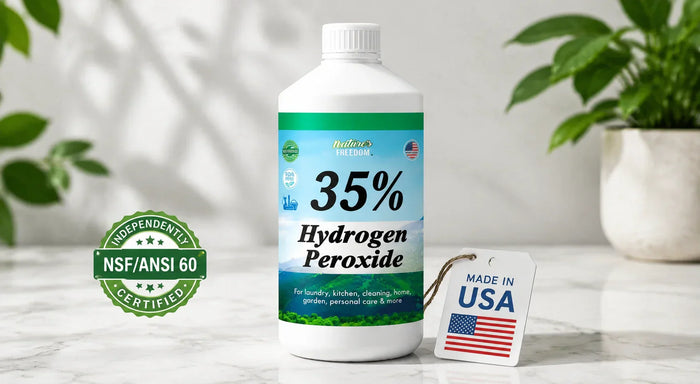
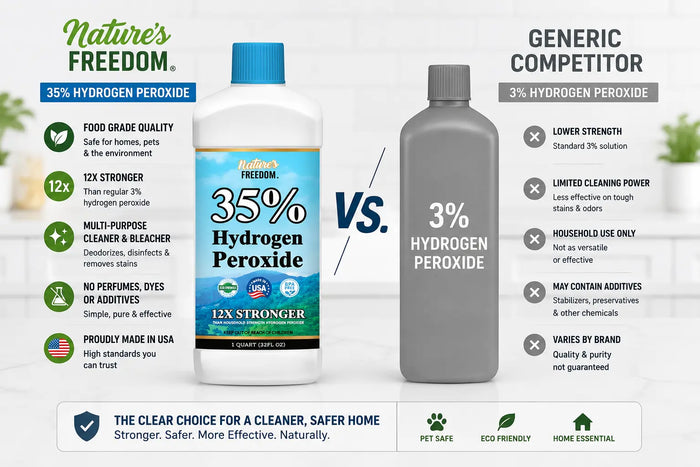
For ice machines in food-contact environments, Nature's Freedom recommends the 35% hydrogen peroxide solution as an alternative - hydrogen peroxide breaks down to water and oxygen with no acetic acid residue, making it better suited for equipment where the treated surfaces contact food or beverages.
Floor and Tile Cleaning
Diluted concentrated vinegar is used on sealed tile, vinyl, and laminate flooring to cut through soap scum and hard water film. A dilution ratio of 1:10 (vinegar to water) is standard for routine floor cleaning. It is not appropriate for unsealed hardwood, natural stone (granite, marble, travertine), or unglazed tile, as acetic acid will etch these surfaces over time.
Drain Maintenance
A 1:10 dilution poured down drains and left for 15 to 20 minutes before flushing with hot water keeps organic buildup from accumulating in drain lines. This is a preventative maintenance application, not a drain-unblocking treatment. For a blocked drain caused by solid material, a physical clearing method is required.
Outdoor and Garden Surfaces
At 45% concentration used undiluted, concentrated vinegar acts as a non-selective contact herbicide. For the full outdoor weed control guide, see the Vinegar Weed Killer sub-pillar. It is also effective at cleaning concrete, brick pavers, and stone patios, dissolving organic staining, moss, and algae. Because it is a non-persistent compound that breaks down rapidly in soil, it does not accumulate in the environment the way synthetic herbicides can.
For outdoor pet odor management alongside cleaning, Nature's Freedom produces an Outdoor Pet Odor Eliminator with an enzyme formula that eliminates odor at the source without acetic acid.
What Surfaces Must You Never Clean with Concentrated Vinegar?
Knowing what to avoid prevents irreversible damage to surfaces and materials.
|
Surface or Material |
Why to Avoid |
Better Alternative |
|
Natural stone: marble, granite, travertine, limestone |
Acid etches and permanently dulls polished surface |
pH-neutral stone cleaner |
|
Unsealed hardwood floors |
Acid strips finish and damages wood fibres |
pH-neutral hardwood floor cleaner |
|
Cast iron cookware |
Acid strips seasoning and promotes rust |
Avoid - use appropriate cast iron care |
|
Aluminum containers or tools |
Acid reacts with aluminum, produces hydrogen gas |
Use glass, HDPE plastic, or stainless steel |
|
Unglazed or porous tile |
Acid penetrates and damages tile body |
pH-neutral tile cleaner |
|
Electronics and screens |
Acid damages anti-reflective and oleophobic coatings |
Isopropyl alcohol on microfibre cloth |
How to Use Concentrated Vinegar for Cleaning Safely
Concentrated vinegar at 45% is classified as a corrosive irritant and must be handled with appropriate precautions. For the complete safety guide including first aid protocols, see Is 45% Vinegar Dangerous? Safety Facts Explained. For pet-specific safety guidance, see Is 45% Vinegar Safe for Pets?.
Required PPE for any handling of undiluted 45% concentrated vinegar: chemical-resistant nitrile or rubber gloves, safety glasses with side shields, long sleeves, and adequate ventilation. This is not optional.
Step-by-Step Dilution and Mixing
1. Measure water first and pour into a glass, HDPE plastic, or stainless steel container. Never use aluminum.
2. Add the measured vinegar slowly to the water - never add water to concentrated acid.
3. Label the container with the dilution ratio and date before use.
4. Use within the session or store in a sealed non-reactive container. Diluted solutions retain working strength for weeks to months.
Dilution Reference Table
For the full 12-application dilution calculator with millilitre examples for every working strength, see How to Dilute 45% Vinegar to 5%.
|
Application |
Dilution Ratio |
Working Strength |
Notes |
|
General surface cleaning |
1:10 |
~4% |
Safe for most sealed surfaces |
|
Hard water / limescale |
1:3 |
~11% |
Apply and let sit 15 to 30 minutes |
|
Mold treatment |
Undiluted or 1:1 |
22 to 45% |
Non-porous surfaces only |
|
Appliance descaling |
1:8 to 1:10 |
4 to 5% |
Rinse thoroughly after |
|
Drain maintenance |
1:10 |
~4% |
Flush with hot water after 15-20 min |
|
Floor cleaning |
1:10 or weaker |
4% or less |
Not for natural stone or unsealed wood |
|
Grout and tile |
1:5 to 1:10 |
4 to 7.5% |
Allow 5 min dwell time, scrub and rinse |
|
Weed killer (outdoors) |
Undiluted or 1:2 |
15 to 45% |
Apply to foliage on warm sunny day |
Why NSF Certification Matters When Choosing Concentrated Vinegar
NSF International is an independent, accredited standards organization that certifies cleaning and sanitation products for safety, efficacy, and ingredient transparency. NSF certification is particularly relevant for products used in food-contact environments or by households with children and pets.
Nature's Freedom 45% Concentrated Vinegar is NSF Certified to NSF/ANSI/CAN 60 for drinking water treatment chemicals, confirming that its formula meets independently verified safety and quality standards. This is a meaningful differentiator from brands that carry no third-party certification.
When evaluating any concentrated vinegar product, look for:
1. NSF certification or equivalent third-party verification
2. A published Safety Data Sheet (SDS) from the manufacturer
3. Clear concentration labeling - exact acetic acid percentage on the label
4. Country of origin and manufacturing transparency
|
Brand |
NSF Certified |
Concentration |
Made in USA |
|
Nature's Freedom |
Yes - NSF/ANSI/CAN 60 |
45% |
Yes |
|
Calyptus |
No |
45% |
Yes |
|
Belle Chemical |
No |
45% |
Unknown |
|
Natural Armor |
No |
45% |
Unknown |
Concentrated Vinegar vs Chemical Cleaners: Which Is Better?
Is concentrated vinegar better than bleach for cleaning? It depends on the application. Bleach is more effective at killing a broader spectrum of pathogens on non-porous surfaces. However, bleach does not dissolve mineral deposits, does not penetrate porous surfaces well, and produces toxic fumes when mixed with ammonia-based products. Concentrated vinegar is the better choice for descaling, mold treatment on porous surfaces, grease cutting, and situations where chemical-free cleaning is a priority.
Is concentrated vinegar better than CLR or other commercial descalers? CLR (Calcium, Lime and Rust) contains a blend of lactic acid, gluconic acid, and lauramine oxide. It is effective at descaling but contains synthetic surfactants and is not certified for food-contact use. Concentrated acetic acid at 45% achieves comparable descaling performance on most surfaces with a simpler, single-ingredient formula and a lower residual risk profile for homes with children and pets.
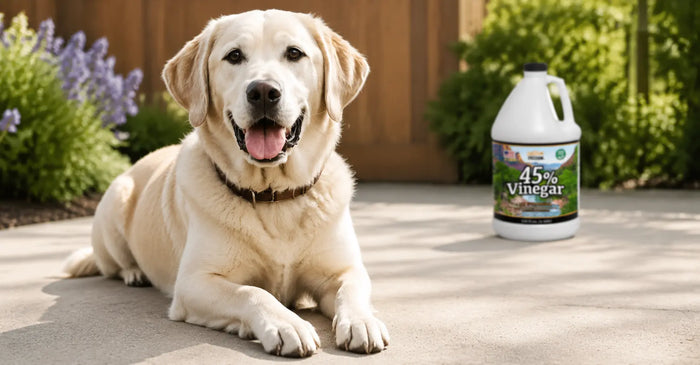
Is concentrated vinegar safe around children and pets once dry? Yes. Acetic acid is a naturally occurring organic acid that breaks down into water and carbon dioxide. Once dry, residue from diluted vinegar poses no toxicity risk to children or pets. For complete pet safety guidance during and after application, see Is 45% Vinegar Safe for Pets?.
How Economical Is Concentrated Vinegar Compared to Ready-to-Use Products?
One gallon of 45% concentrated vinegar at a 1:10 dilution for general cleaning produces approximately 10 gallons of working solution. At 1:3 for descaling, one gallon yields 4 gallons of working solution. Compared to pre-mixed cleaning products priced per-use, the cost per effective application is significantly lower.
Most households with mixed indoor and outdoor use find a single gallon covers several months of regular use across all the applications in this guide. The gallon purchase price reflects this economy - the working solution cost per task is a fraction of single-use commercial products.
The Strongest Natural Cleaner. NSF Verified.
Every application of concentrated vinegar for cleaning in this guide depends on verified 45% acidity. Nature's Freedom 45% Concentrated Vinegar is NSF Certified to NSF/ANSI/CAN 60 for drinking water treatment chemicals, made in the USA, and ready for every cleaning application in this guide. One gallon. Over a dozen uses. Every dilution covered. Order the 45% Concentrated Vinegar - 1 Gallon. Browse the full concentrated vinegar collection, or contact the Nature's Freedom team with questions.
Frequently Asked Questions: Concentrated Vinegar for Cleaning
1. What concentration of vinegar is best for cleaning?
For general household cleaning, 20% to 30% concentrated vinegar is effective and easier to handle. For heavy-duty tasks like descaling appliances, treating mold, or outdoor weed control, 45% concentration provides the strongest results. Nature's Freedom 45% Concentrated Vinegar is NSF Certified to NSF/ANSI/CAN 60 for drinking water treatment chemicals and made in the USA - the highest residential-grade concentration from a verified source.
2. Can I use concentrated vinegar to clean my coffee maker or dishwasher?
Yes. A diluted solution of concentrated vinegar, typically 1 part 45% vinegar to 8 to 10 parts water, is effective for descaling coffee makers and dishwashers. Run it through one full cycle, then run one or two plain water cycles to flush residual acidity. Check your appliance manual for compatibility, particularly for machines with aluminum internal components.
3. How does concentrated vinegar compare to CLR or other commercial descalers?
CLR contains a blend of lactic acid, gluconic acid, and lauramine oxide. It is effective at descaling but contains synthetic surfactants and is not certified for food-contact use. Concentrated acetic acid at 45% achieves comparable descaling performance on most surfaces with a simpler, single-ingredient formula and a lower residual risk profile for homes with children and pets.
4. Will concentrated vinegar kill 100% of mold?
Acetic acid is effective at killing common household mold species on non-porous surfaces. It does not achieve 100% kill rates on all mold species in all conditions. For large-scale mold infestations or mold on porous building materials such as drywall, professional remediation is recommended. The EPA mold cleanup guidelines recommend professional assessment for affected areas over 10 square feet.
5. Is concentrated vinegar flammable?
No. Acetic acid solutions at 45% concentration are not classified as flammable. Pure glacial acetic acid at 99%+ concentration is flammable, but this does not apply to concentrated cleaning vinegar at the concentrations sold for household use.
6. Where can I buy 45% concentrated vinegar?
45% concentrated vinegar is not available in most grocery or hardware stores due to its strength and handling requirements. It is available online directly from Nature's Freedom at naturesfreedom.com/products/45-percent-vinegar-1-gallon and through Amazon. Always verify concentration labeling and check for an SDS before purchasing from any seller.
Key Takeaways
• Concentrated vinegar for cleaning at 45% is 9 times stronger than standard household vinegar and effective for limescale removal, mold treatment, grease cutting, appliance descaling, drain maintenance, and outdoor cleaning.
• Acetic acid reacts chemically with calcium carbonate to dissolve limescale without abrasive scrubbing. The fizzing reaction confirms the acid is working.
• Dilution is required for most indoor surfaces: 1:10 for general cleaning, 1:3 for heavy mineral deposits. Do not use on natural stone, aluminum, cast iron, or unglazed tile.
• One gallon at 45% produces multiple gallons of working solution at each dilution, making it significantly more economical per cleaning task than standard vinegar or pre-mixed commercial products.
• Nature's Freedom 45% Concentrated Vinegar is NSF Certified to NSF/ANSI/CAN 60 for drinking water treatment chemicals and made in the USA, providing third-party verified quality assurance that Calyptus, Belle Chemical, and Natural Armor do not offer.
• For food-contact appliance descaling such as ice machines and beverage equipment, use the 35% hydrogen peroxide solution instead - it leaves no acetic acid residue after use.